cattreatchickenadult
Homemade Chicken Cat Treats
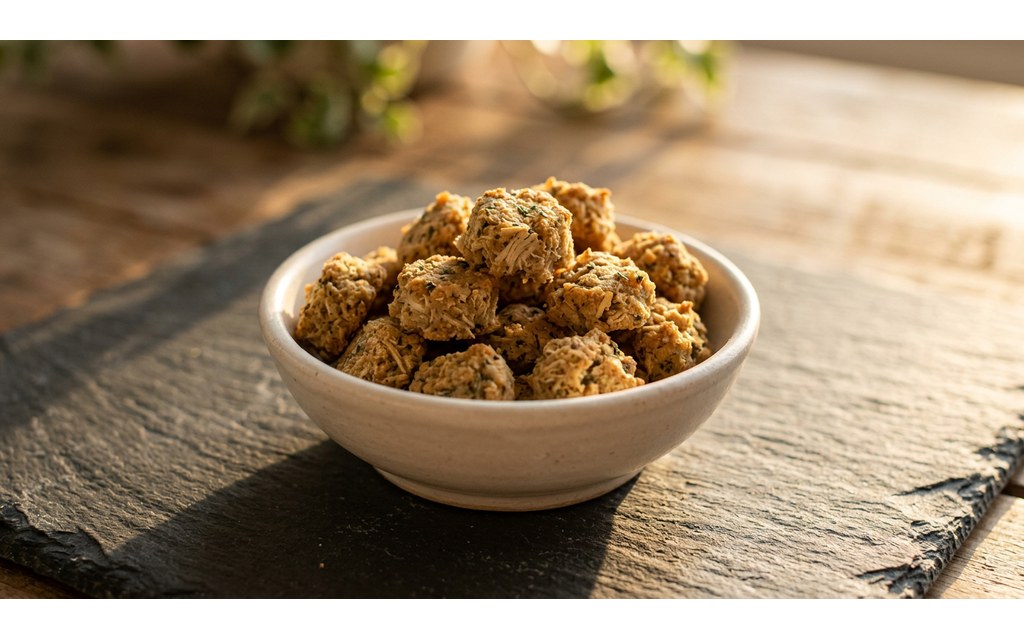
These bite-sized treats use plain cooked chicken and coconut flour for a grain-free snack. The addition of catnip makes them particularly enticing for feline companions.
Prep
10 min
Cook
25 min
Yields
About 20 treats
Level
easy
Ingredients
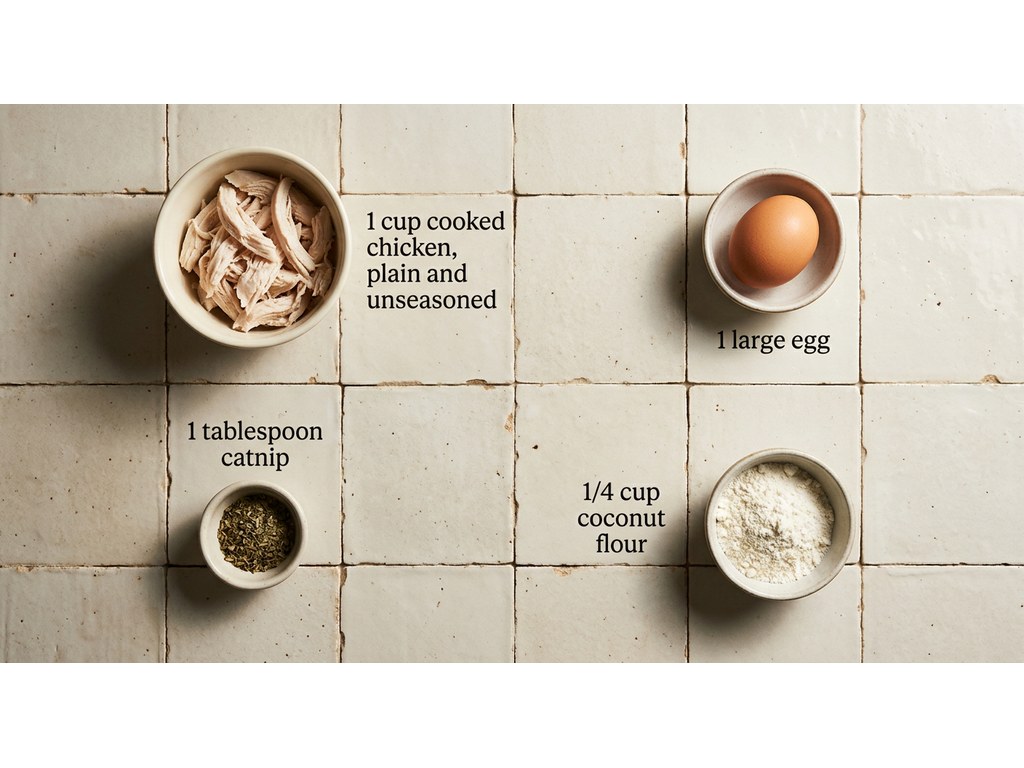
- 1 cup cooked chicken, plain and unseasoned
- 1 large egg
- 1 tablespoon catnip
- 1/4 cup coconut flour
Steps
- Preheat the oven at 180C/350F degrees and line a baking sheet with parchment paper.
- Place all the ingredients in a food processor and blend to combine.
- Roll out the blended mixture in between two sheets of parchment paper to about 1/4 inch thick.
- Score the rolled mixture into small bite sized squares. Or you could roll the mixture into small balls.
- Bake for 25 minutes and flip the bites over after 15 minutes.
- Allow to cool before giving as a treat.
Substitutions
- Substitute chicken with cooked turkey or canned tuna.
- Use oat flour if coconut flour is unavailable.
- Omit catnip if your cat does not respond to it.
Portion guide
Suggested portions only, your vet knows your pet's needs best.
Portion calculator
Enter your cat's weight for a scaled serving suggestion.
Suggested portion
1 small piece, 2-3× per week
1 kg12 kg
Starting point only, adjust for activity, body condition, and vet guidance.
| Pet weight | Suggested portion |
|---|---|
| 4 kg | 1 small piece, 2-3× per week |
| 3 kg | 1-2 small pieces, 2× per week |
| 6 kg | 2-3 small pieces, 2-3× per week |
Nutrition & calorie check
Estimated calories per serving compared to your pet's daily energy need.
Nutrition estimate
Rough estimate from common ingredient values, not a substitute for a veterinary nutrition plan.
Whole recipe
296 kcal
Per treat
15 kcal
Treat budget (cat)
24 kcal
One serving uses ~63% of the daily treat budget15 / 24 kcal
Do not feed
- Onion, garlic, chives, leeks (toxic in any form)
- Cooked bones, splinter risk
See our full Safety & Nutrition guide.
Storage
Store in an airtight container in the fridge for up to 1 week.
Vet disclaimer: Companion Paws Kitchen recipes are educational. They are not a substitute for veterinary advice or a complete-and-balanced commercial diet. Always consult your vet before introducing new foods, especially for puppies, kittens, seniors, pregnant pets, or pets with medical conditions.
More for cats