cattreatmixedadult
Homemade Crunchy Cat Treats
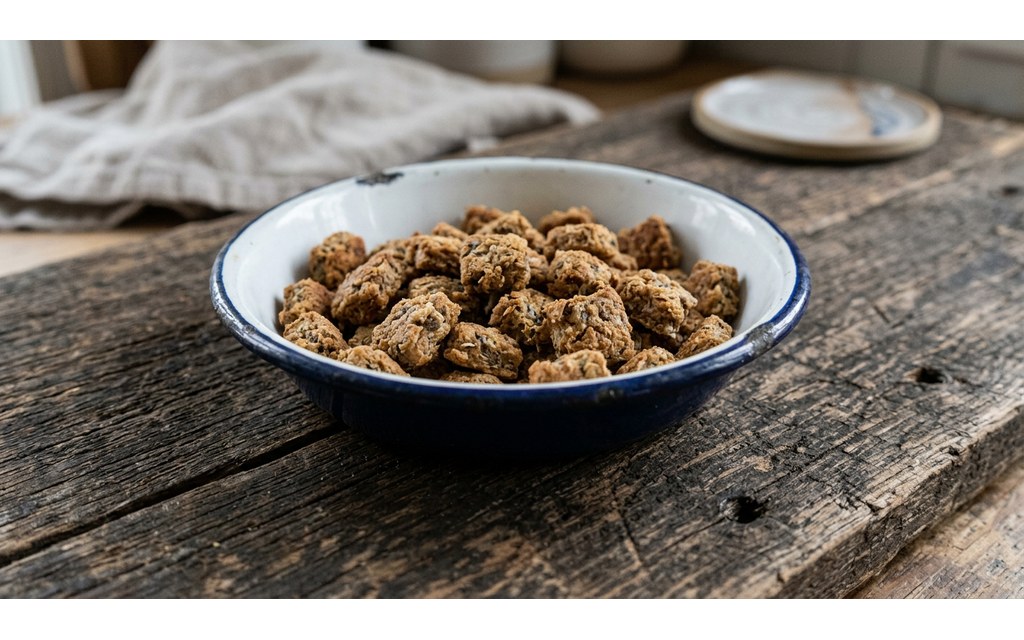
Sardines and turkey combine to create a crunchy, aromatic treat for cats. This duo of proteins provides a rich source of omega-3 fatty acids.
Prep
15 min
Cook
50 min
Yields
About 60 treats
Level
medium
Ingredients
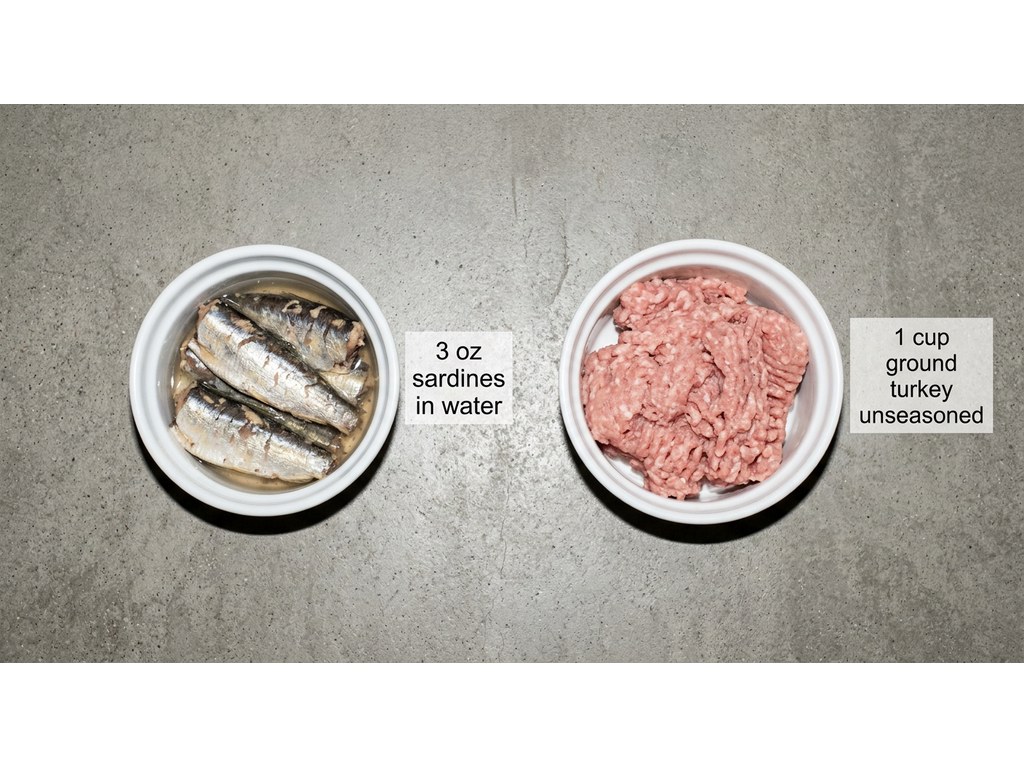
- 3 oz sardines in water
- 1 cup ground turkeyunseasoned
Steps
- Preheat oven to 350°F (175°C).
- In a bowl, add the sardines and ground turkey and mix tho roughly until well combined.
- Spoon the mixture into a silicone mold, pressing it down to fill each cavity.
- 40-50 minutes, or until the treats are firm and golden brown around the edges.
- Cool completely before serving. The treats will firm up more as they cool.
Substitutions
- Use canned salmon in water instead of sardines.
- Substitute ground turkey with ground chicken.
- Add a pinch of dried parsley for freshness.
Portion guide
Suggested portions only, your vet knows your pet's needs best.
Portion calculator
Enter your cat's weight for a scaled serving suggestion.
Suggested portion
1 small piece, 2-3× per week
1 kg12 kg
Starting point only, adjust for activity, body condition, and vet guidance.
| Pet weight | Suggested portion |
|---|---|
| 4 kg | 1 small piece, 2-3× per week |
| 3 kg | 1-2 small pieces, 2× per week |
| 6 kg | 2-3 small pieces, 2-3× per week |
Nutrition & calorie check
Estimated calories per serving compared to your pet's daily energy need.
Nutrition estimate
Rough estimate from common ingredient values, not a substitute for a veterinary nutrition plan.
Whole recipe
535 kcal
Per treat
9 kcal
Treat budget (cat)
24 kcal
One serving uses ~38% of the daily treat budget9 / 24 kcal
Do not feed
- Onion, garlic, chives, leeks (toxic in any form)
- Raw, smoked, or salt-cured fish
- Fish bones, always debone before cooking
See our full Safety & Nutrition guide.
Storage
Store in a dry, airtight container in the fridge for 1 week.
Vet disclaimer: Companion Paws Kitchen recipes are educational. They are not a substitute for veterinary advice or a complete-and-balanced commercial diet. Always consult your vet before introducing new foods, especially for puppies, kittens, seniors, pregnant pets, or pets with medical conditions.
More for cats