cattreatfishadult
Tuna Treats For Cats
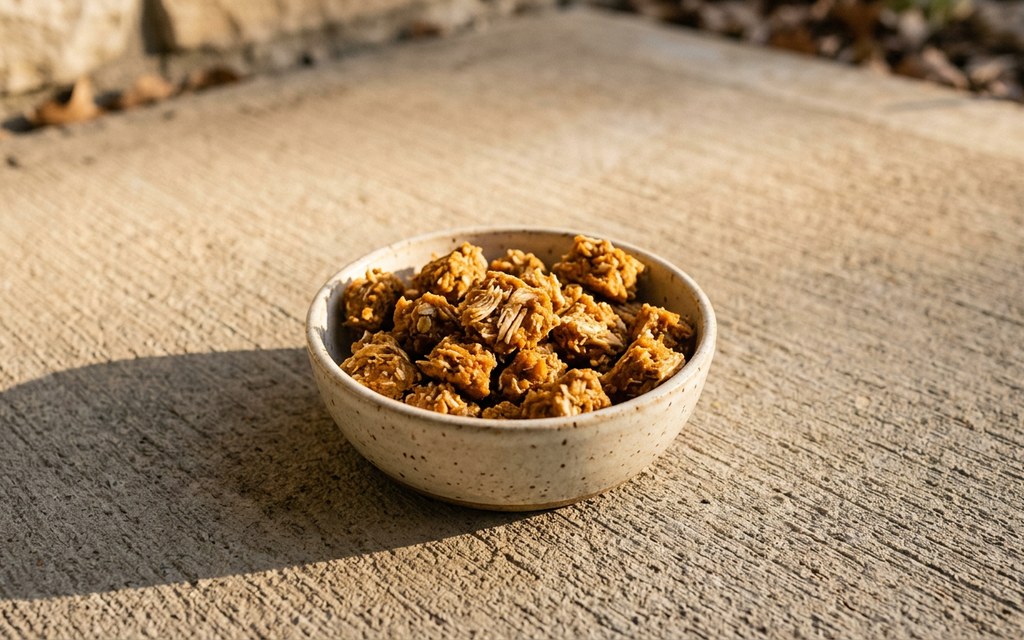
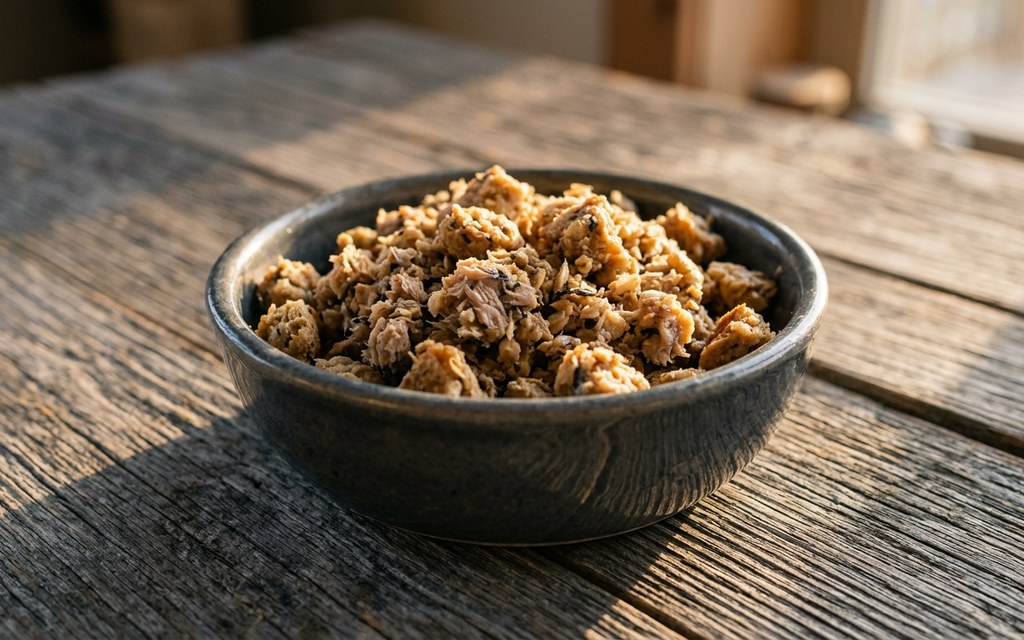
A simple, three-ingredient recipe designed for feline palates. These treats are high in protein and use egg white as a light binder.
Prep
10 min
Cook
20 min
Yields
About 30 treats
Level
easy
Ingredients
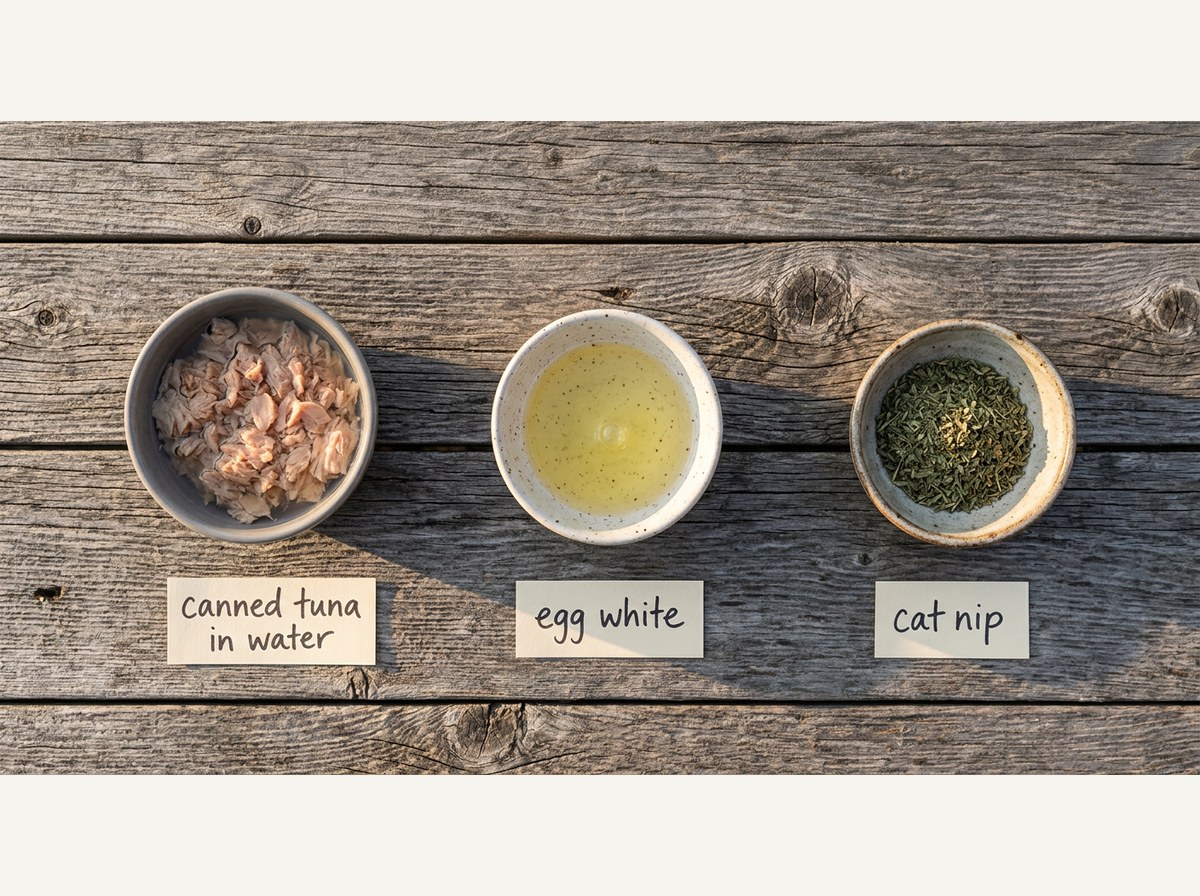
- 7 oz canned tuna in water
- 1 large egg white
- 1 tablespoon cat nip
Steps
- Preheat your oven to 325°F (165°C) and line a baking sheet with parchment paper.
- Blend the tuna, egg white, and catnip in a medium bowl until you get a smooth, thick paste.
- Spread the mixture onto the prepared baking sheet,.
- Bake for 15-20 minutes, or until the edges are lightly golden and the treats are set.
- Cut or tear the baked tuna treat into bite sized pieces. Cool completely before serving.
Substitutions
- Canned chicken in water can replace the tuna.
- Dried bonito flakes can be used instead of catnip.
Portion guide
Suggested portions only, your vet knows your pet's needs best.
Portion calculator
Enter your cat's weight for a scaled serving suggestion.
Suggested portion
1 small piece, 2-3× per week
1 kg12 kg
Starting point only, adjust for activity, body condition, and vet guidance.
| Pet weight | Suggested portion |
|---|---|
| 4 kg | 1 small piece, 2-3× per week |
| 3 kg | 1-2 small pieces, 2× per week |
| 6 kg | 2-3 small pieces, 2-3× per week |
Nutrition & calorie check
Estimated calories per serving compared to your pet's daily energy need.
Nutrition estimate
Rough estimate from common ingredient values, not a substitute for a veterinary nutrition plan.
Whole recipe
308 kcal
Per treat
10 kcal
Treat budget (cat)
24 kcal
One serving uses ~42% of the daily treat budget10 / 24 kcal
Do not feed
- Onion, garlic, chives, leeks (toxic in any form)
- Raw or smoked fish; fish with bones
See our full Safety & Nutrition guide.
Storage
Store in the fridge for 4 days or freeze for 2 months.
Vet disclaimer: Companion Paws Kitchen recipes are educational. They are not a substitute for veterinary advice or a complete-and-balanced commercial diet. Always consult your vet before introducing new foods, especially for puppies, kittens, seniors, pregnant pets, or pets with medical conditions.
More for cats