dogmealturkeyadult
Christmas Dinner for Dogs
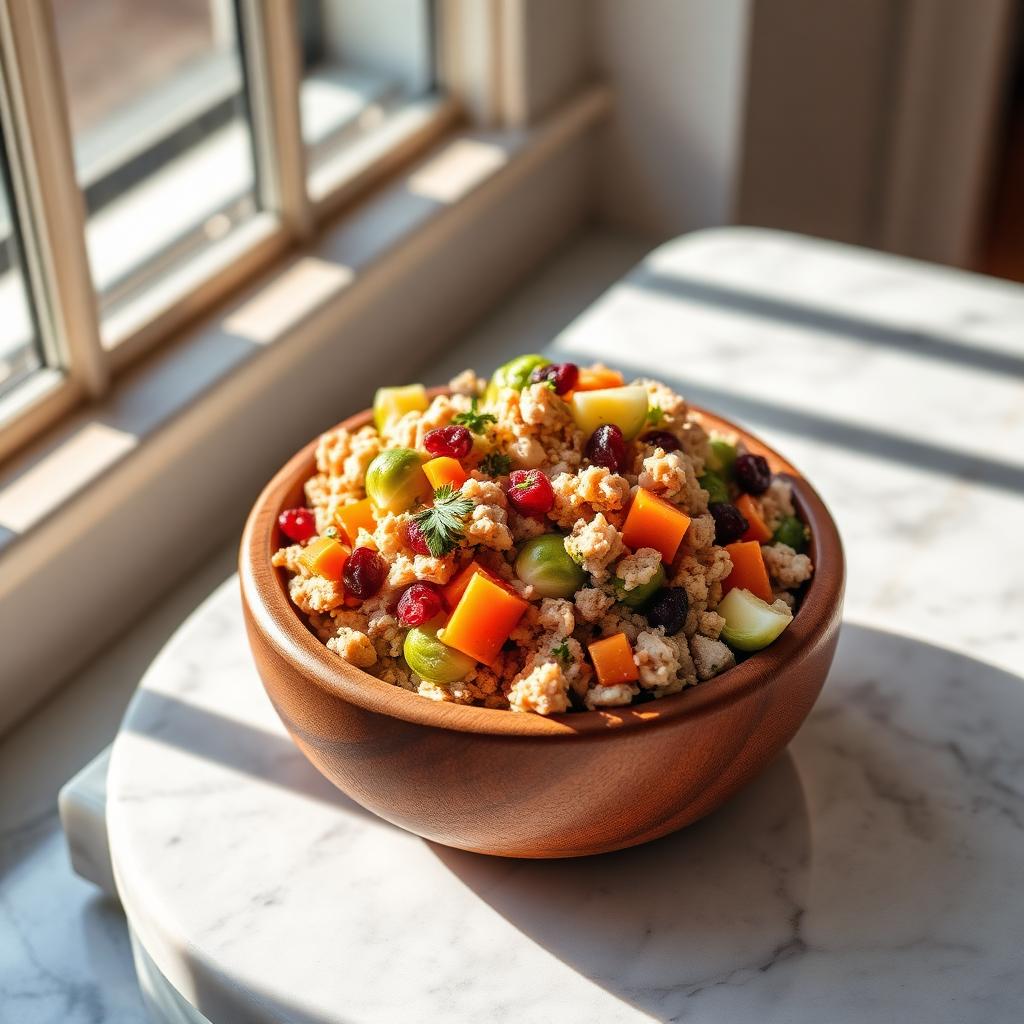
A festive turkey-based meal featuring seasonal staples like cranberries and brussels sprouts. This recipe allows your dog to safely join holiday celebrations.
Prep
10 min
Cook
30 min
Yields
About 8 cups
Level
easy
Ingredients
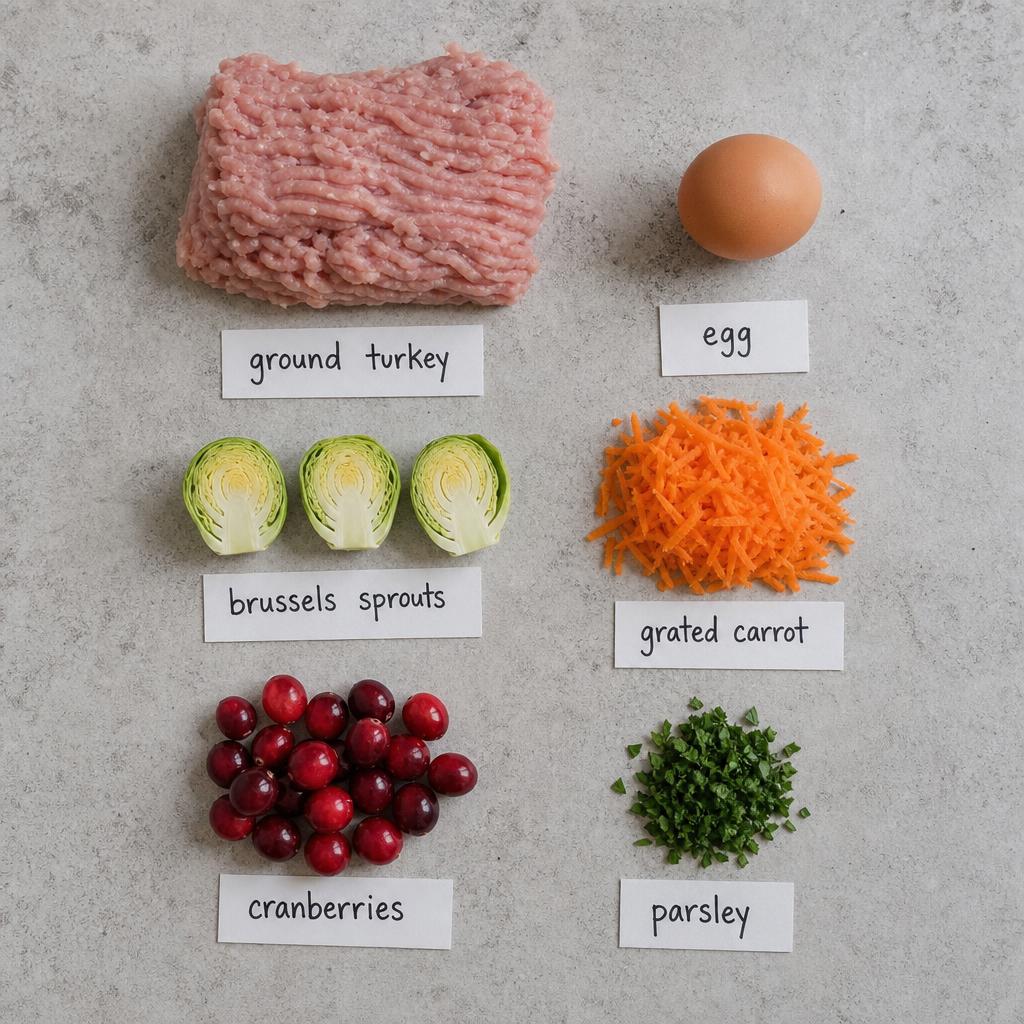
- 1 lb ground turkey
- 1 large egg
- 3 brussel sprouts
- 1 carrot, peeled and grated
- 1/4 cup cranberries
- 1 tablespoons parsley
Steps
- Preheat oven to 350°F (180°C). Line a 1 lb loaf tin with parchment paper.
- Shred the brussels sprouts with a Mandoline.
- In a mixing bowl, combine all ingredients until well mixed.
- Spoon the mixture into the prepared loaf tin.
- Bake for 20-25 minutes or until fully cooked.
- If there is any excess liquid on the loaf, bloat with a paper towel.
- Let cool to room temperature before removing from the tin and serving.
Substitutions
- Use chicken instead of turkey
- Replace brussels sprouts with broccoli
- Swap cranberries for blueberries
Portion guide
Suggested portions only, your vet knows your pet's needs best.
Portion calculator
Enter your dog's weight for a scaled serving suggestion.
Suggested portion
¾ cup per meal
1 kg60 kg
Starting point only, adjust for activity, body condition, and vet guidance.
| Pet weight | Suggested portion |
|---|---|
| 5 kg | ~⅓ cup per meal |
| 15 kg | ~¾ cup per meal |
| 30 kg | ~1½ cups per meal |
Nutrition & calorie check
Estimated calories per serving compared to your pet's daily energy need.
Nutrition estimate
Rough estimate from common ingredient values, not a substitute for a veterinary nutrition plan.
Whole recipe
134 kcal
Per cup
17 kcal
Daily energy need
854 kcal
One serving uses ~2% of daily calories17 / 854 kcal
Do not feed
- Onion, garlic, chives, leeks (toxic in any form)
See our full Safety & Nutrition guide.
Storage
Keep refrigerated for 3 days or freeze for 2 months.
Vet disclaimer: Companion Paws Kitchen recipes are educational. They are not a substitute for veterinary advice or a complete-and-balanced commercial diet. Always consult your vet before introducing new foods, especially for puppies, kittens, seniors, pregnant pets, or pets with medical conditions.
More for dogs