dogmeallambadult
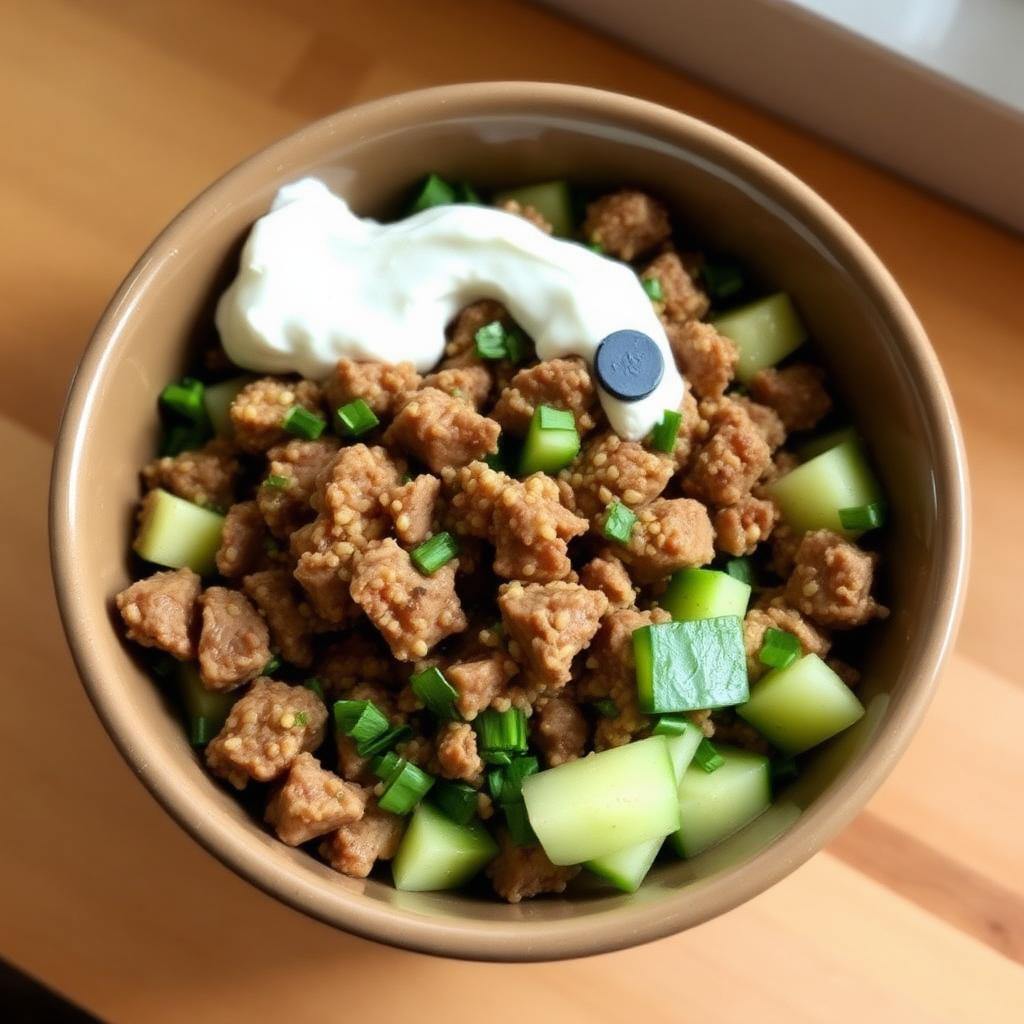
Lamb Quinoa Dog Dinner
A fresh take on dinner using quinoa as a gluten-free base paired with ground lamb and cooling cucumber.
Prep
15 min
Cook
15 min
Yields
About 5 cups
Level
easy
Ingredients
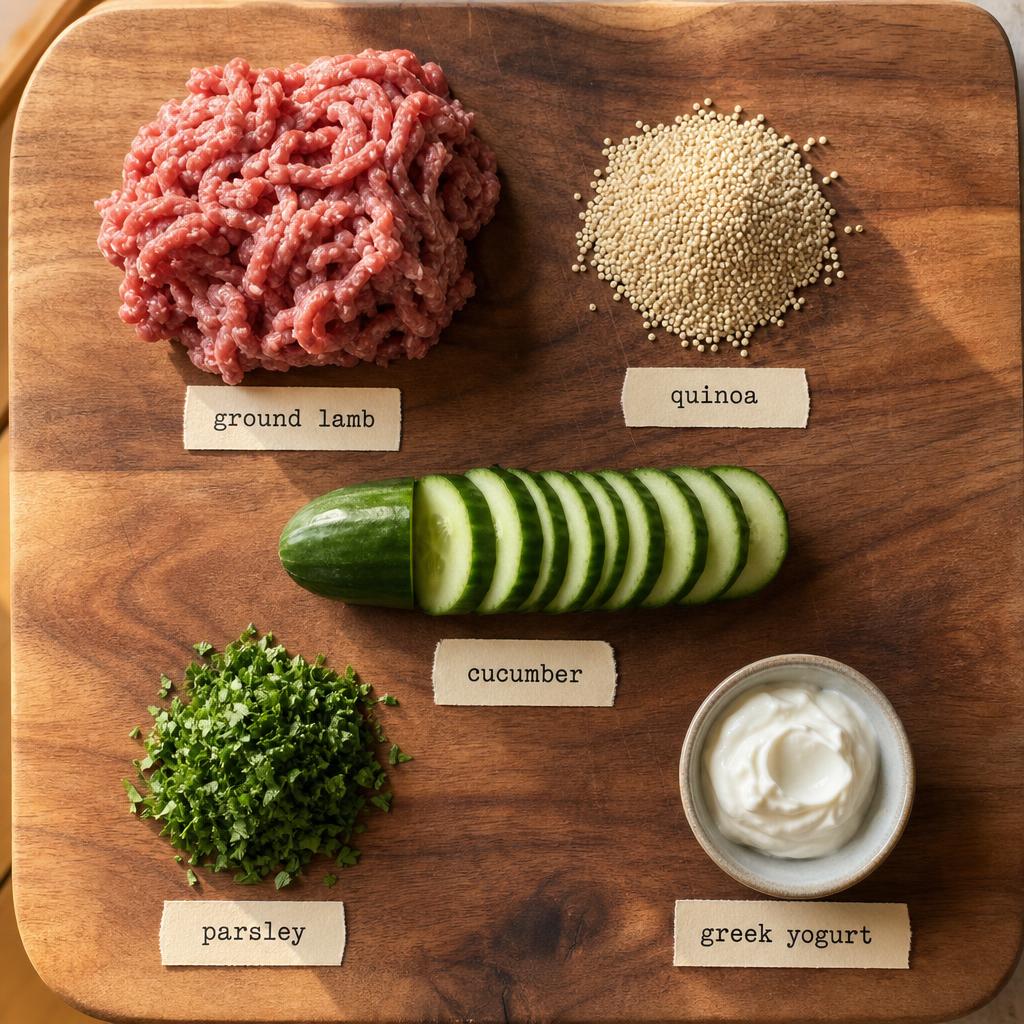
- 1 lb ground lamb
- 1/2 cup quinoa
- 1/2 medium cucumber
- 1/4 cup fresh parsley, chopped
- 1 tablespoon Greek yogurt
Steps
- Cook the quinoa according to package instructions (typically 1 part quinoa to 2 parts water, simmered for ~15 minutes until fluffy).
- Brown the ground lamb in a skillet over medium heat. Drain excess fat and let cool slightly.
- Peel and finely chop the cucumber, and roughly chop the parsley.
- In a large mixing bowl, combine the cooked lamb, quinoa, cucumber and parsley. Serve with the Greek yogurt on top.
Substitutions
- Substitute brown rice for quinoa
- Use plain goat yogurt instead of Greek yogurt
- Swap parsley with fresh cilantro
Portion guide
Suggested portions only, your vet knows your pet's needs best.
Portion calculator
Enter your dog's weight for a scaled serving suggestion.
Suggested portion
¾ cup per meal
1 kg60 kg
Starting point only, adjust for activity, body condition, and vet guidance.
| Pet weight | Suggested portion |
|---|---|
| 5 kg | ~⅓ cup per meal |
| 15 kg | ~¾ cup per meal |
| 30 kg | ~1½ cups per meal |
Nutrition & calorie check
Estimated calories per serving compared to your pet's daily energy need.
Nutrition estimate
Rough estimate from common ingredient values, not a substitute for a veterinary nutrition plan.
Whole recipe
173 kcal
Per cup
35 kcal
Daily energy need
854 kcal
One serving uses ~4% of daily calories35 / 854 kcal
Do not feed
- Onion, garlic, chives, leeks (toxic in any form)
See our full Safety & Nutrition guide.
Storage
Refrigerate for up to 3 days or freeze for 2 months.
Vet disclaimer: Companion Paws Kitchen recipes are educational. They are not a substitute for veterinary advice or a complete-and-balanced commercial diet. Always consult your vet before introducing new foods, especially for puppies, kittens, seniors, pregnant pets, or pets with medical conditions.
More for dogs