dogmealchickenadultsenior
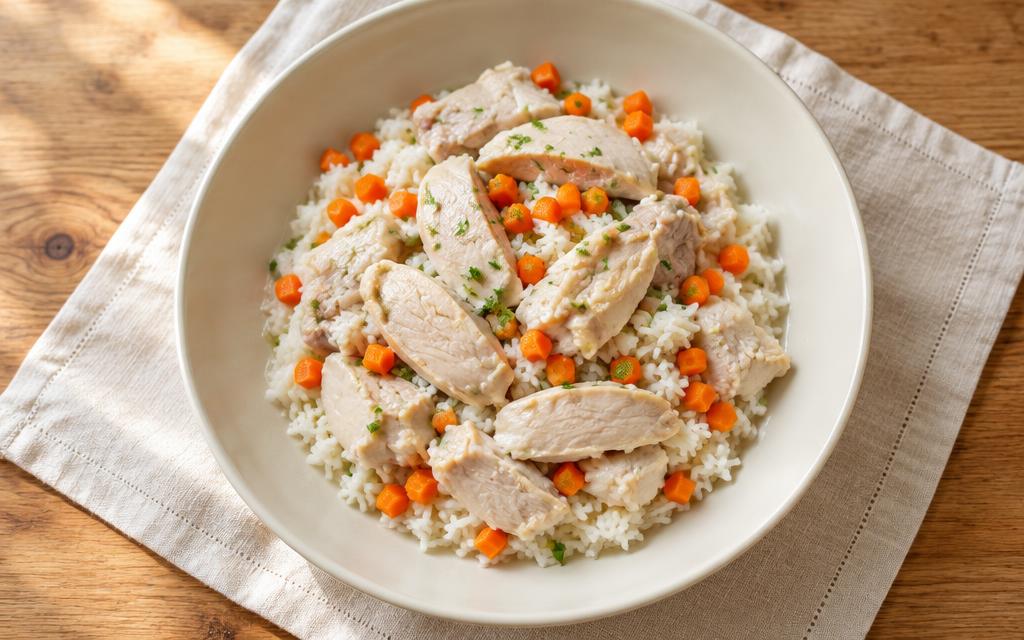
Light Chicken & Rice Dog Dinner
A moist, mild dinner for older dogs whose vet has asked for less protein and more water at mealtimes, with rice carrying the bulk of the bowl.
Prep
10 min
Cook
25 min
Yields
About 5 cups
Level
easy
Ingredients
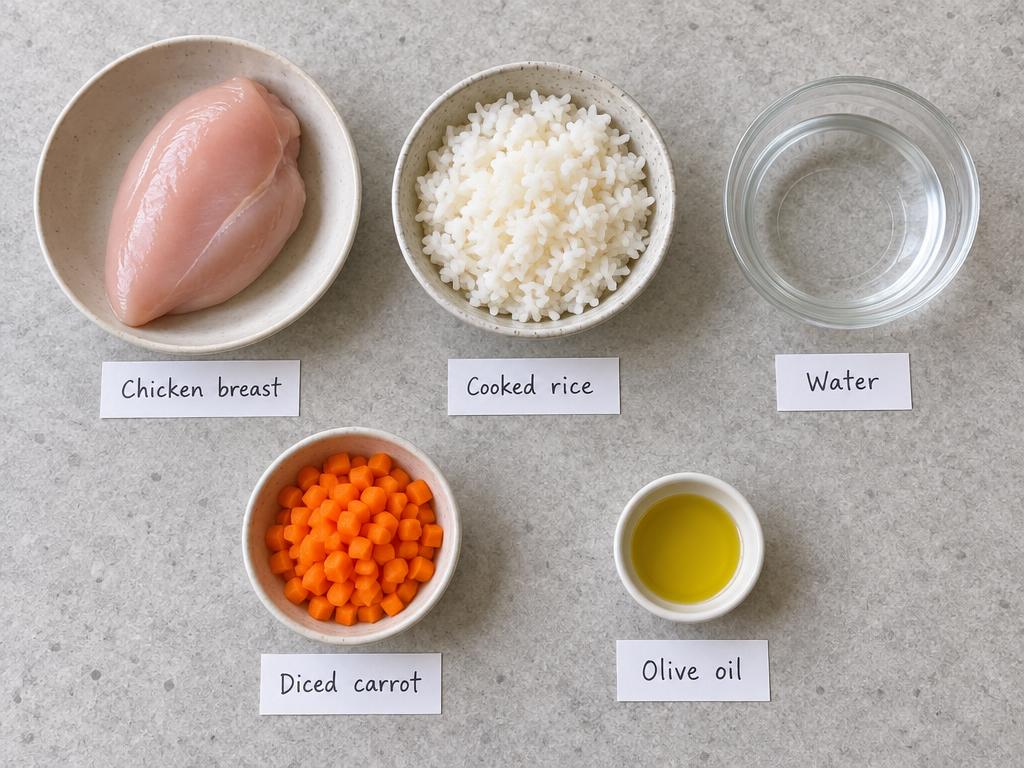
- 300 g boneless, skinless chicken breast
- 2 cups cooked white rice
- 1 cup water
- 1/2 cup carrot, finely diced
- 1 tsp olive oil
Steps
- Poach the chicken breast in the water for 18 to 20 minutes, until cooked through.
- Steam the diced carrot for 6 minutes until soft.
- Chop the chicken small and return it to the pan with its broth.
- Fold the rice and carrot through, keeping the bowl loose and moist.
- Cool to room temperature, then stir in the olive oil before serving.
Substitutions
- Cooked pearl barley in place of the rice.
Portion guide
Suggested portions only, your vet knows your pet's needs best.
Portion calculator
Enter your dog's weight for a scaled serving suggestion.
Suggested portion
¾ cup per meal
1 kg60 kg
Starting point only, adjust for activity, body condition, and vet guidance.
| Pet weight | Suggested portion |
|---|---|
| 5 kg | ~1/3 cup per meal |
| 15 kg | ~3/4 cup per meal |
| 30 kg | ~1 1/2 cups per meal |
Nutrition & calorie check
Estimated calories per serving compared to your pet's daily energy need.
Nutrition estimate
Rough estimate from common ingredient values, not a substitute for a veterinary nutrition plan.
Whole recipe
1212 kcal
Per cup
242 kcal
Daily energy need
854 kcal
One serving uses ~28% of daily calories242 / 854 kcal
Do not feed
- Onion, garlic, chives, leeks (toxic in any form)
- Cooked bones of any kind, splinter risk
- Salty broths or stock cubes
See our full Safety & Nutrition guide.
Storage
Refrigerate up to 3 days, or freeze for up to 1 month.
Vet disclaimer: Companion Paws Kitchen recipes are educational. They are not a substitute for veterinary advice or a complete-and-balanced commercial diet. Always consult your vet before introducing new foods, especially for puppies, kittens, seniors, pregnant pets, or pets with medical conditions.
More for dogs