
dogfrozenmixedadult
Strawberry Ice Cream For Dogs
A creamy frozen blend of cottage cheese and strawberries. This recipe provides a high-protein alternative to traditional frozen dog treats.

Prep
10 min
Cook
0 min
Yields
About 8 cubes
Level
easy
Ingredients
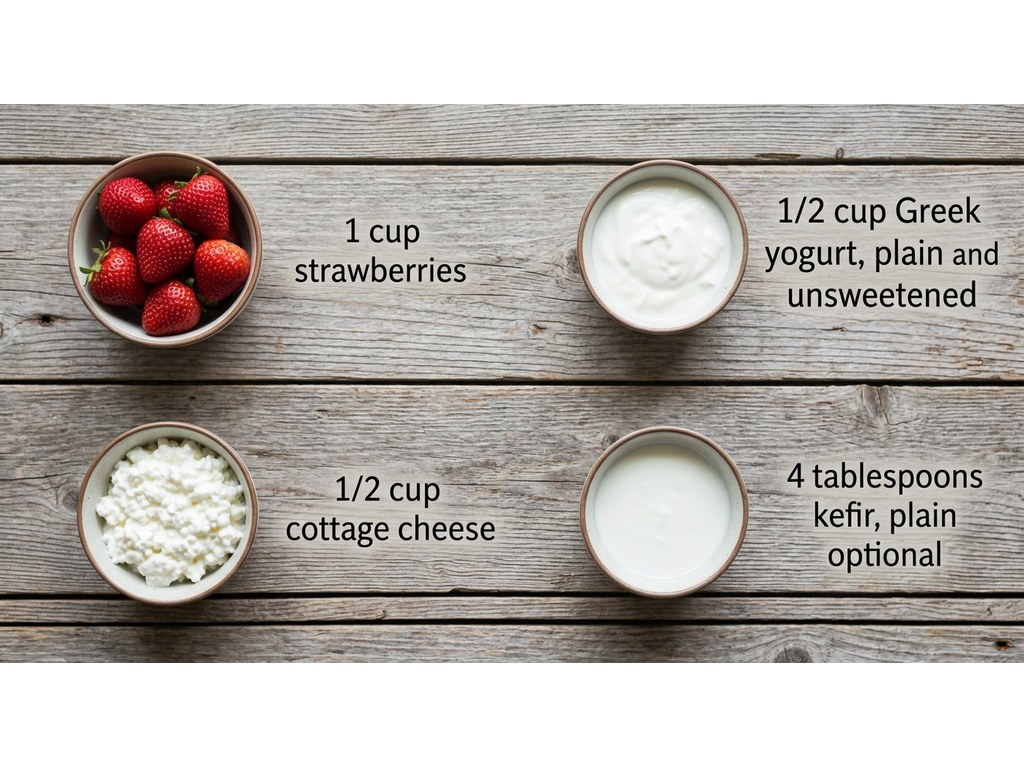
- 1 cups trawberries
- 1/2 cup Greek yogurt, plain and unsweetened
- 1/2 cup cottage cheese
- 4 tablespoons kefir, plain optional
Steps
- If using fresh strawberries, wash them tho roughly and remove the stems. If using frozen, let them thaw slightly for easier blending.
- In a blender or food processor, combine the strawberries, Greek yogurt, cottage cheese, and optional kefir. Blend until smooth and creamy.
- Pour the mixture into an ice cube tray, silicone molds, or a shallow dish. Freeze for at least 4 hours or until firm.
- Let the ice cream sit at room temperature for a few minutes to soften slightly before serving. Scoop into your dog’s bowl or let them enjoy a pup-friendly popsicle!
Substitutions
- Replace cottage cheese with more Greek yogurt if preferred.
- Pureed mango can substitute for the strawberries.
Portion guide
Suggested portions only, your vet knows your pet's needs best.
Portion calculator
Enter your dog's weight for a scaled serving suggestion.
Suggested portion
1 cube, 2-3× per week
1 kg60 kg
Starting point only, adjust for activity, body condition, and vet guidance.
| Pet weight | Suggested portion |
|---|---|
| 5 kg | ½ cube, 2-3× per week |
| 15 kg | 1 cube, 2-3× per week |
| 30 kg | 2 cubes, 2-3× per week |
Nutrition & calorie check
Estimated calories per serving compared to your pet's daily energy need.
Nutrition estimate
Rough estimate from common ingredient values, not a substitute for a veterinary nutrition plan.
Whole recipe
588 kcal
Per cube
74 kcal
Treat budget (dog)
85 kcal
One serving uses ~87% of the daily treat budget74 / 85 kcal
Do not feed
- Onion, garlic, chives, leeks (toxic in any form)
See our full Safety & Nutrition guide.
Storage
Store in the freezer for up to 2 months.
Vet disclaimer: Companion Paws Kitchen recipes are educational. They are not a substitute for veterinary advice or a complete-and-balanced commercial diet. Always consult your vet before introducing new foods, especially for puppies, kittens, seniors, pregnant pets, or pets with medical conditions.
More for dogs